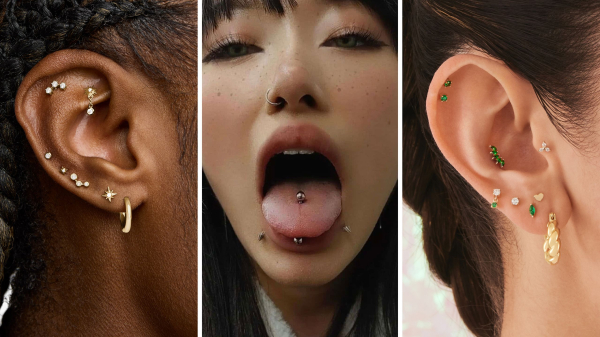
 Courtesy of @studs and @livebytheswordtattooSave this storySave this story
If 2026 is 2016 all over again, the spontaneous girl who’s been dormant in me for a decade couldn’t be more thrilled. I’ll set the scene: It’s a Wednesday evening on the Lower East Side, and my best friend, Rochelle, and I are leaving our favorite dive bar. As I pocket a pen on the way out, a neon-lit piercing studio catches Rochelle’s eye. She saunters in and asks for a lobe piercing. I follow her lead with a tragus piercing, channeling Evan Rachel Wood’s bravery in Thirteen.
Little did we know that Rochelle’s stacked earlobe and my tragus would still resonate a decade later, especially when paired with updated jewelry or a coordinating piercing. “With so many different metals and stones to choose from, it’s hard not to want everything pierced,” says Christine Swaim, a piercer at Oak & Poppy Tattoos and Piercings in Los Angeles. “The evolution of body jewelry has really changed the industry, and each piece gives clients freedom of expression.”
Regardless of your thoughts on the 2016 renaissance, piercing trends have continued to expand and evolve. Between the red carpet and your For You Page, there’s no shortage of inspiration if your 2016 self won’t shut up about getting a new piece. That’s why we turned to professional piercers for their takes on the hottest trends right now. The good news? There’s something for everyone to love, from delicate, barely there effects to dramatic throwbacks.
Double tragus
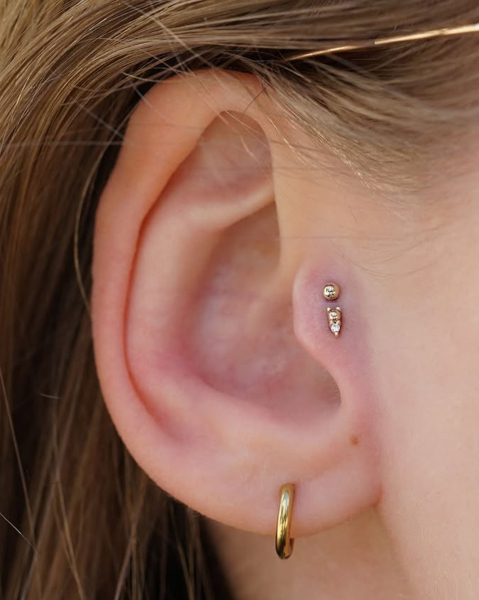
Double tragus (top)
Courtesy of @ninemoonspiercing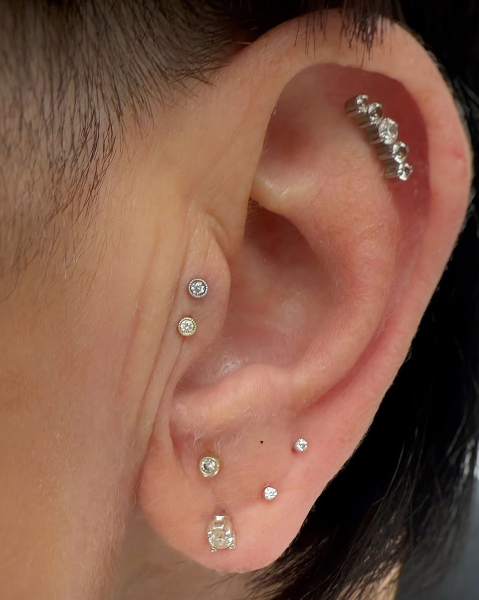
Double tragus (center-left piercing)
Courtesy of @lcpiercing
Riding the momentum from 2025’s stacked lobe trend, Starr Ellis, a piercer and the owner of New York City’s Nine Moons Piercing, says the stacked aesthetic will move to the tragus. “Clients are loving stacked studs in areas that aren’t just the earlobes, and a double tragus piercing is a fun way to do that if your anatomy is suited for it,” she says. “There needs to be enough of the small triangular or rhomboid structure in front of the ear canal (that’s your tragus) to be able to pierce and heal more than one stud.”
Incorporating mini hoops, which can be worn solo or stacked, is also a popular approach to styling your tragus, says Maria Tash, jewelry designer and founder of Maria Tash Fine Jewelry and Luxury Piercing in Los Angeles. “Clients often point out the small hoops many of our staff wear, which is an option they hadn’t previously considered, since most associate tragus piercings solely with studs,” she says.
Because the tragus area is prone to swelling, Tash recommends switching to a mini hoop once the piercing has fully healed, which can take anywhere from 6 to 12 months. “It is important to mention to your piercer that you want your tragus piercing designed to wear a small ring when it’s healed, as this request can shift how the piercer angles the depth of the piercing,” she adds.
Paired nostrils
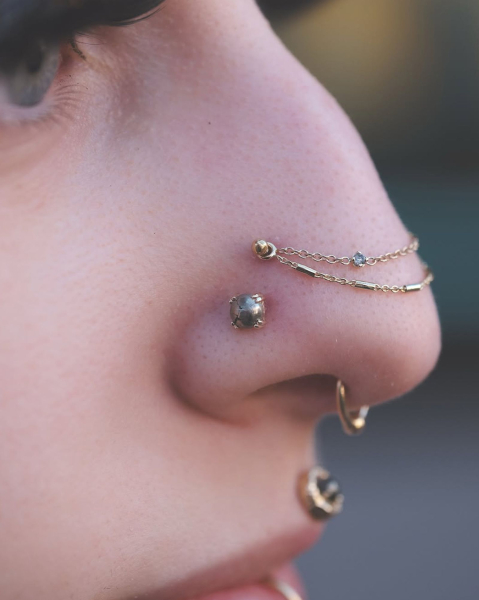
Paired nostril piercings with chain (top, center)
Courtesy of @charlesfin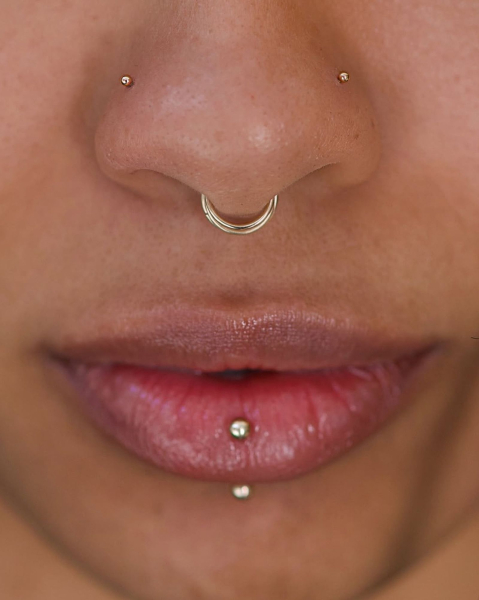
Paired nostril piercings (top, center)
Courtesy of @ccccaarly
If a nostril piercing is a way to flatter the shape of your nose and draw attention to your face, consider the paired nostril trend a full spotlight. “Nostril piercings allow for a surprising amount of creativity, from paired and double placements to elegant, stacked configurations,” Tash says. “It seems that today’s modern nose piercing sees the whole plane of cartilage as pierceable, not just the traditional small area halfway back on the side of the nostril.”
According to Swaim, paired nostril piercings—whether two piercings on one side or one piercing on each side of the nose—have become increasingly popular, with many clients opting for the ladder effect. “The ladder involves placing a stud on each side, with a chain laying across the bridge to connect them,” she says. Depending on the thickness of the chain you select, the result can be as delicate or dramatic as you’d like.
And it’s not just the Snapchat-age crowd opting for creative nostril placements. Tash says that stacked or paired nostril piercings have been a hit among all age groups. “We’ve recently seen a notable shift in who’s seeking this piercing, with more clients in their late 30s to late 40s embracing the look,” she explains. “While the typical demographic skews younger, these clients often arrive with a touch of hesitation, only to leave looking as though the piercing had always been a natural part of their features.”
Faux snug and rook
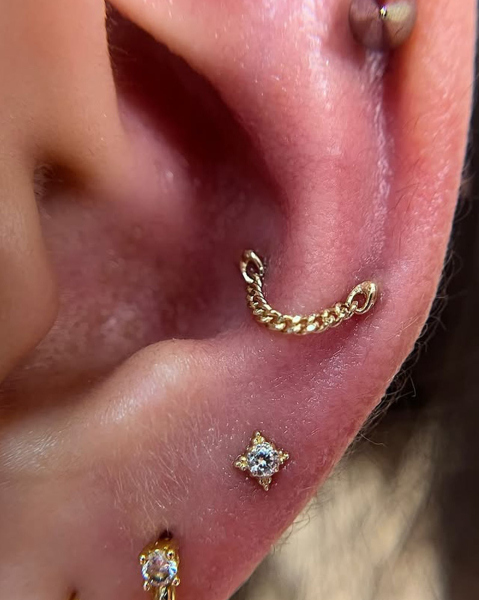
Faux snug (top piercing)
Courtesy of @kyliestabs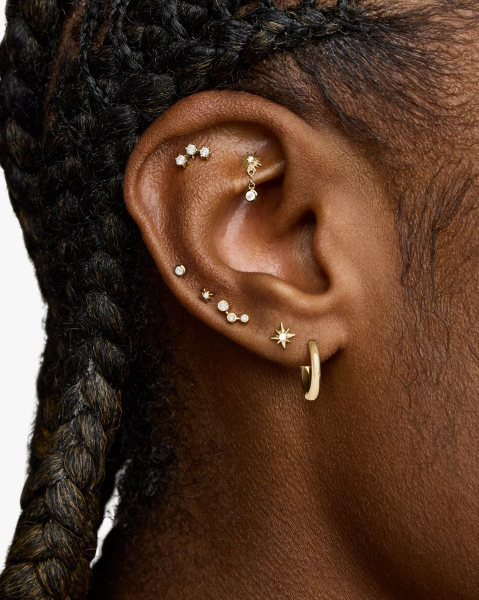
Faux rook (top piercing with chain)
Courtesy of Studs
Inspired to get a snug or rook piercing but don’t have the anatomy for the real deal? Look no further than the faux options, which are creatively placed piercings that give the look of a biblically accurate snug or rook. “They are much easier to heal and can be very instant gratification to look like a cute, curved barbell perfectly placed, or once fully healed, can be worn with chains or rings,” Ellis says.
Typically, a snug involves a piercing on the inner ridge of cartilage in your ear, while a rook is a piercing in the second-highest cartilage ridge of your ear (above the daith and tragus). The faux snug pairs a conch with a helix or double-helix piercing, while the faux rook is one piercing in the upper inner cartilage with a dangle or drop-style jewelry to mimic the look of a traditional rook piercing. “They deliver the look of an advanced, complex placement for clients who don’t have the anatomy or want to avoid a true snug or rook,” says Emmy Zobitz, senior merchandising manager at Studs.
Jewelry sizing and placement need to be super-precise to emulate the illusion of a true rook or snug. For a faux snug, in particular, you’ll be healing two separate piercings as opposed to one, so make time to practice proper aftercare and cleaning. Says Zobitz, “If you want to add a bold, balanced, mid-ear adornment, these are great options.”
Snakebite helix
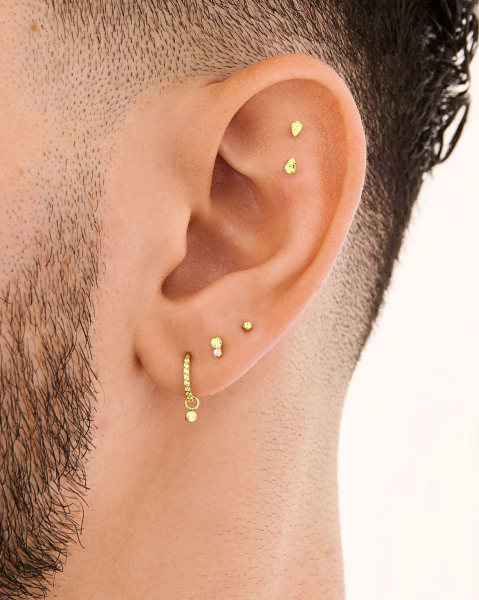
Snakebite helix (top)
Courtesy of @charlesfin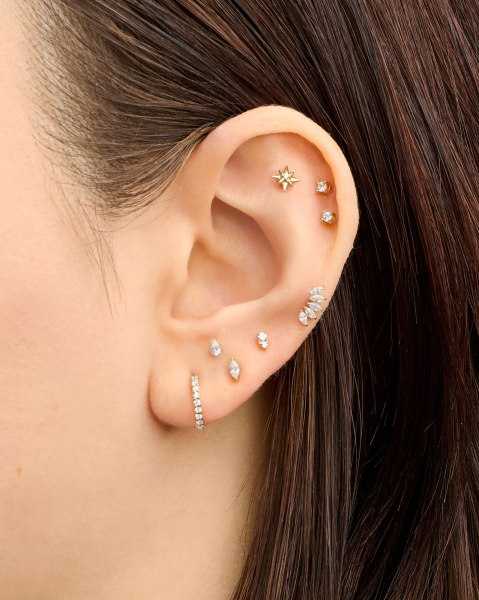
Snakebite helix (top right, along the ridge of ear)
Courtesy of @studs
No, we’re not talking about the snakebite lip piercings that dominated the indie sleaze era. According to Zobitz, the snakebite aesthetic at Studs involves two delicate piercings placed side by side on the ear, and clients have been asking for snakebite helix piercings to add to their earscapes. “It makes a statement right where most of your ear’s real estate is and allows you to get truly creative with jewelry,” she says. “With so much space along the helix, you can tailor the look to your style, whether you keep it minimal on the outer edge or move inward to take up more room on the flat with matching studs or contrasting shapes.”
Similar to the faux snug piercing, a snakebite helix will require healing two cartilage piercings at the same time, so keep in mind the aftercare process, and lifestyle factors that could impact healing (like which side you sleep on or use of over-the-ear headphones).
Classic '90s placements
Perhaps driven by the current ’90s and ’00s pop-culture renaissance—and all the cool, famous girlies on TikTok declaring the return of all things Y2K—belly-button rings and tongue piercings are embarking on their own comeback tour.
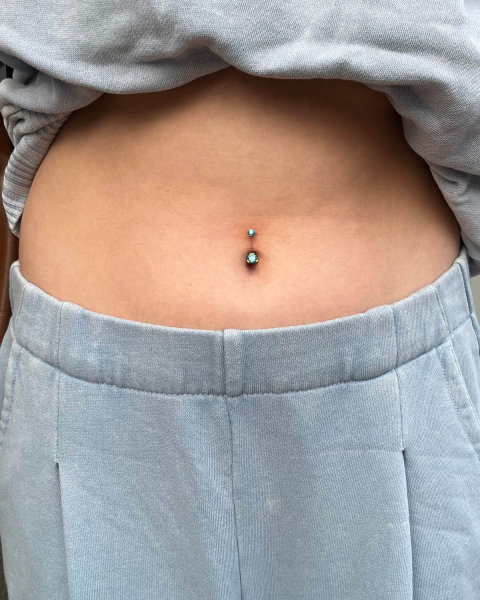
Classic navel ring
Courtesy of @velvetelvispiercing
Classic navel ring on Beyoncé
Getty Images
“Navel piercings usually consist of a curved barbell, with or without gems, going through the upper ‘lip’ or ridge of the navel, with the top ball or gem sitting above and the bottom resting inside the navel itself,” says Swaim. “I’ve also been seeing tongue piercings with a straight barbell that goes vertically through the tongue near the center, with one ball resting on the surface and the other sitting underneath.”
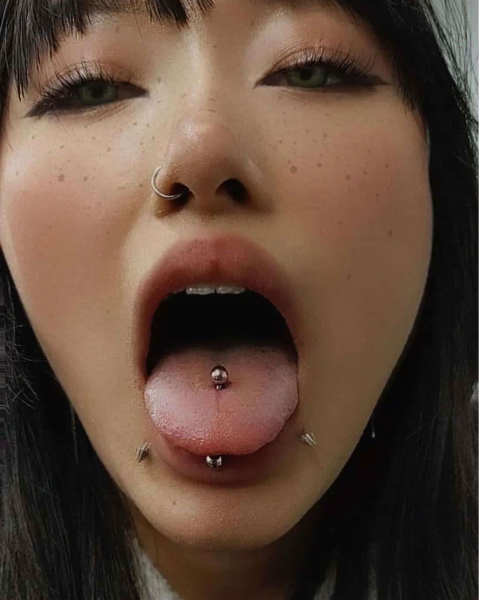
Classic tongue piercing
Courtesy of @livebytheswordtattoo
Those of us of a certain Spotify-listening age may already have an existing piercing from the era, but if you’re getting your belly button pierced for the first time, keep in mind the healing process: Because of its location on the body and factors like movement and contact with clothing, your piercing can take anywhere from three to six months to fully heal. A tongue piercing can take from four to six weeks to heal, says Swaim.
Floating navel
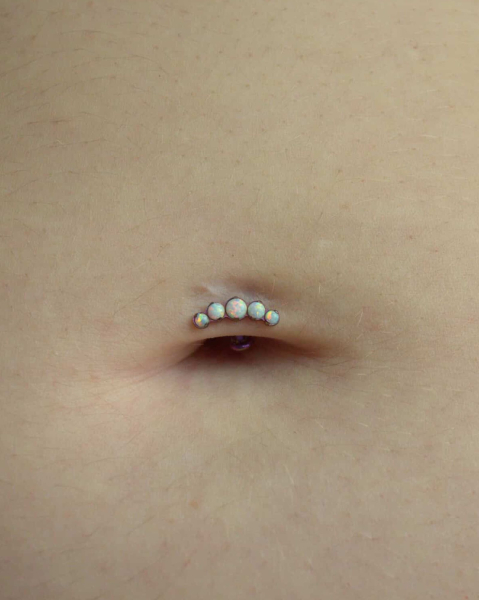
Floating navel
Courtesy of @birthrightadornment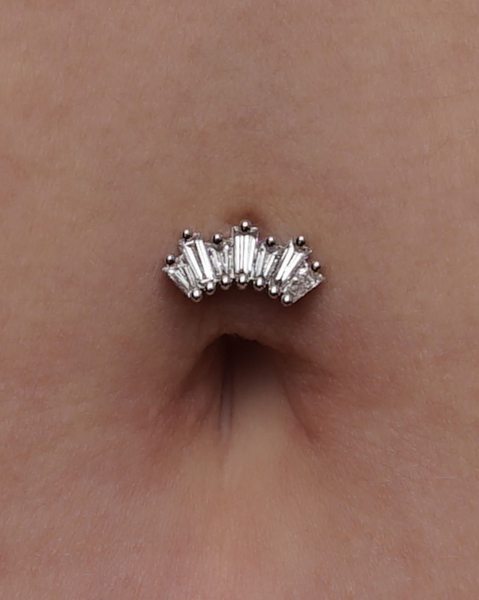
Floating navel
Courtesy of @ninemoonspiercing
And while we’re on the topic of belly-button rings, Ellis has seen a definite uptick in floating navel piercings, which primarily showcase the top end of the jewelry to create the appearance of a gem or charm positioned just above your belly button. “It’s a great option for a very unique, nontraditional navel piercing, and can also help cover or distract from previous navel piercing scarring,” she says. “The look of a simple, larger, or more elegant decorative end above the navel is definitely increasing in popularity.”
In lieu of the traditional belly-button piercing, which features a dual-ended and curved barbell, floating pieces of navel jewelry have the decorative piece placed at the top end of the barbell, while the bottom portion is held in place with a small ball or disc that sits inside the navel. It’s a minimalist take on the trend that can align with a more delicate aesthetic. Just make sure to get an anatomy check beforehand to ensure you’re a good candidate for it.
Hidden helix and rook
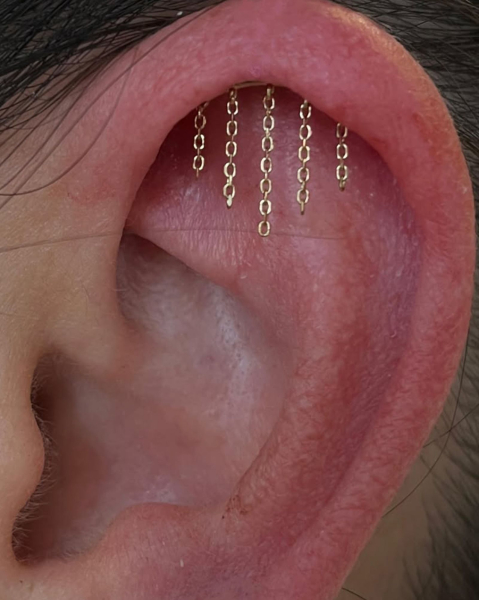
Hidden helix
Courtesy of @piercingsbymakenna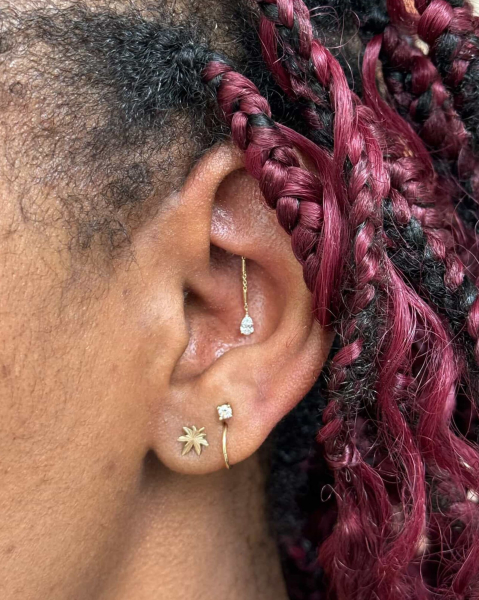
Hidden rook (top piercing with chain)
Courtesy of @burymein.gold
The hidden helix (just under the upper ridge at the top of the ear) and the rook are strategically placed so that the piercing holes are concealed on the underside of each respective cartilage fold. The finished result is as visually stunning as it is interesting—almost as if you have tiny chandeliers suspended from each area. “The idea was for jewelry or light to emerge from behind and underneath a fold of cartilage,” says Tash, who patented each placement in her studio as the Tash Helix and the Tash Hidden Rook, with specific jewelry designs to match. “I wanted to create a look where clients wonder, How does that work?”
Having enough cartilage to conceal the exact areas where the piercing is placed is key. “We look for anatomy that has a prominent fold of the helix or rook to conceal the mechanism of the piece,” she says. “We can also use our smaller, threaded-charm designs when a client doesn't have a large fold to achieve this effect.” Between the two, Tash notes, the hidden helix is the more popular placement, though we love the idea of stacking both for a decorated finish.
Meet the experts
- Starr Ellis is a piercer and the owner of Nine Moons Piercing in New York City.
- Christine Swaim is a piercer at Oak & Poppy Tattoos and Piercings in Los Angeles.
- Maria Tash is a jewelry designer and the founder of Maria Tash Fine Jewelry and Luxury Piercing in Los Angeles.
- Emmy Zobitz is the senior merchandising manager at Studs.
Leave a Reply